
Nazan é Gerente Sênior de Produto e Engenharia na Consensys, trabalhando no MetaMask. Ela iniciou sua carreira na Microsoft na divisão de Core Windows OS, atuando na pilha de rede — especialmente TCP/IP, NDIS e drivers de dispositivo. Ela fundou duas startups com capital de risco, uma no setor de cripto, e bootstrapped outra antes de ingressar na Consensys. Ela utiliza IA como ferramenta de apoio na pesquisa e elaboração de conteúdo inicial.
Ler todos os artigos
O que é descentralização e por que ela importa agora
A maioria dos sistemas com os quais as pessoas interagem diariamente — bancos, plataformas sociais, bancos de dados de cadeias de suprimentos, redes de energia — é controlada por uma única organização que armazena dados, define as regras e atua como intermediária. Se essa organização sofrer uma violação, for mal administrada ou encerrada, todos que dependem dela serão afetados. A descentralização é uma alternativa estrutural. Em vez de uma única entidade concentrar o poder, o controle, os dados e a tomada de decisões são distribuídos por uma rede de participantes, sem ponto único de falha ou autoridade.
A tecnologia blockchain é a infraestrutura que torna possível a descentralização em larga escala. Um blockchain é um livro-razão distribuído que registra transações de forma transparente em muitos computadores. Contratos inteligentes — programas autoexecutáveis armazenados em um blockchain — cumprem os termos de um acordo automaticamente quando condições predefinidas são atendidas. Juntas, essas tecnologias permitem que pessoas e organizações realizem transações, verifiquem informações e se coordenem sem depender de um intermediário central.
Hoje, a infraestrutura descentralizada processa trilhões de dólares em valor, rastreia mercadorias em cadeias de suprimentos globais e governa organizações com milhares de colaboradores. Este artigo apresenta uma visão geral das principais áreas sendo moldadas pela descentralização em 2026: finanças descentralizadas (DeFi), verificação de cadeias de suprimentos, sistemas de energia, identidade e propriedade de dados, e governança organizacional. Cada seção explora como a tecnologia funciona hoje, onde existem implementações e quais desafios ainda persistem.
Aviso: Este guia tem fins exclusivamente educacionais. Não constitui aconselhamento financeiro, não é uma solicitação e não se destina ao público do Reino Unido. As tecnologias descentralizadas e as plataformas baseadas em blockchain envolvem riscos e podem não ser adequadas para todos os usuários.
Finanças descentralizadas (DeFi) e convergência institucional
O que é DeFi e onde está em 2026
DeFi refere-se a serviços financeiros construídos em redes blockchain que operam sem intermediários tradicionais, como bancos ou corretoras. Em vez de um banco aprovar um empréstimo ou uma corretora executar uma negociação, contratos inteligentes realizam essas funções automaticamente, seguindo regras transparentes e auditáveis.
O total de valor bloqueado (TVL) nos protocolos DeFi está entre $130 bilhões e $140 bilhões no início de 2026. O setor abrange negociação com autocustódia (disponível por meio de carteiras como a MetaMask), empréstimos e financiamentos (Aave, Compound, Morpho), exchanges descentralizadas (Uniswap, Curve), tokenização de ativos do mundo real, protocolos de seguro e agregadores de rendimento.
Negociação e carteiras com autocustódia
A negociação é uma das formas mais comuns pelas quais as pessoas têm o primeiro contato com o DeFi. Em vez de depender de uma exchange centralizada (CEX), banco ou corretora que controla o livro de ordens e guarda os fundos dos clientes, uma exchange descentralizada (DEX) utiliza contratos inteligentes e pools de liquidez, permitindo que qualquer pessoa troque tokens ou forneça garantias. Carteiras de criptomoedas com autocustódia, como a MetaMask, podem consultar múltiplas exchanges descentralizadas para encontrar preços competitivos em trocas de tokens em todas as principais redes blockchain, incluindo mercados de ativos do mundo real tokenizados, como ações, ETFs e commodities.
Essas mesmas interfaces também podem conectar usuários a futuros perpétuos e mercados de previsão onchain, além de outros derivativos como futuros de pré-mercado e de convexidade, permitindo que traders especulem sobre a variação de preços de ativos ou sobre o resultado futuro de eventos do mundo real, mantendo o controle dos fundos até o momento da transação. À medida que mais volume migra para redes blockchain, formadores de mercado profissionais e instituições focadas em DeFi estão aprofundando a liquidez, o que melhora os preços e reduz o slippage para traders comuns.
Empréstimos, financiamentos e ativos tokenizados
Em 2026, os empréstimos em DeFi amadureceram e se tornaram um mercado global competitivo. O Aave atualmente detém a maior participação, com aproximadamente $25,346 bilhões em TVL em 10 de abril de 2026. A atualização V4 do Aave, lançada em 30 de março de 2026, introduziu uma arquitetura hub-and-spoke para unificar a liquidez entre mercados de empréstimos independentes. Além disso, o Compound oferece empréstimos gerenciados algoritmicamente, o Maple Finance oferece empréstimos e rendimento de nível institucional, o Morpho otimiza as taxas por meio de correspondência peer-to-peer, e novos participantes como o Euler atraem depósitos com mecanismos de risco modulares.
A tokenização de ativos do mundo real (RWA) consiste na criação de tokens digitais em um blockchain que representam a propriedade de ativos físicos ou financeiros. O mercado de RWA cresceu para um valor de ativos distribuídos de $29,22 bilhões em 10 de abril de 2026, com um valor de ativos representados de $370,88 bilhões. Os Títulos do Tesouro dos EUA respondem por $13,53 bilhões desse total (10 de abril de 2026), com títulos tokenizados, commodities e crédito privado compondo o restante.
Um sinal de convergência institucional ocorreu em fevereiro de 2026, quando a BlackRock listou seu fundo tokenizado do Tesouro BUIDL na Uniswap por meio de uma parceria com a Securitize. O fundo — que detinha aproximadamente $2,2 bilhões na época — é negociado por meio da UniswapX, onde formadores de mercado autorizados competem por preço e as negociações são liquidadas atomicamente onchain. A BlackRock também adquiriu tokens de governança UNI, assumindo pela primeira vez uma participação direta na governança de um protocolo DeFi. Separadamente, a Grayscale solicitou um ETF spot de AAVE, e a Charles Schwab anunciou planos para lançar negociação spot de criptomoedas no primeiro semestre de 2026.
Riscos: contratos inteligentes, governança e regulamentação
A participação em DeFi pode envolver riscos. Contratos inteligentes podem conter bugs ou vulnerabilidades exploráveis — o exploit da bridge Wormhole em 2022, por exemplo, resultou na perda de mais de $320 milhões em ativos wrapped. Mais recentemente, em março de 2026, o Drift Protocol da Solana, uma DEX, foi drenado em $285 milhões, mais de 50% do seu TVL. Exploits em bridges já custaram bilhões em perdas acumuladas ao setor DeFi.
Além dos riscos de golpes, os mecanismos de liquidação em protocolos de empréstimo também podem forçar o encerramento automático de posições durante movimentos bruscos de preço.
A concentração de governança é uma preocupação estrutural. Em março de 2026, um documento de trabalho do Banco Central Europeu constatou que mais de 80% do poder de voto nos principais protocolos está concentrado em aproximadamente 100 endereços, e cerca de um terço dos principais participantes de governança não pode ser definitivamente identificado.
Os marcos regulatórios estão sendo definidos, mas ainda estão incompletos. O GENIUS Act — sancionado em 18 de julho de 2025 — estabeleceu o primeiro marco federal dos EUA para stablecoins de pagamento. A regulamentação Markets in Crypto-Assets (MiCA) da UE abrange prestadores de serviços de criptoativos nos estados-membros. A Stablecoins Ordinance de Hong Kong (aprovada em 21 de maio de 2025) adiciona mais uma jurisdição ao cenário. A legislação mais ampla sobre estrutura de mercado — incluindo o proposto CLARITY Act — ainda está em desenvolvimento.
Verificação e transparência em cadeias de suprimentos
O problema com as cadeias de suprimentos tradicionais
As cadeias de suprimentos tradicionais dependem de bancos de dados isolados, registros em papel e auditorias manuais. Rastrear um produto da prateleira até sua origem pode levar dias ou semanas, e fraudes — de produtos de luxo falsificados a alimentos com rótulos incorretos — muitas vezes passam despercebidas até que o dano já esteja feito.
Como funciona o rastreamento baseado em blockchain
O blockchain introduz um livro-razão compartilhado e resistente a adulterações, onde cada transação, transferência e mudança de status é registrada. Combinados com sensores de IoT que capturam dados de temperatura, GPS e condições em tempo real, esses sistemas criam uma cadeia de custódia verificável da origem ao consumidor. Contratos inteligentes podem automatizar verificações de conformidade, acionando alertas quando as condições se desviam de limites predefinidos — por exemplo, se uma remessa em cadeia de frio ultrapassar uma faixa de temperatura segura. O resultado é um registro único e auditável, acessível a todos os participantes autorizados da rede.
Walmart–IBM Food Trust: de sete dias para 2,2 segundos
Um dos casos de uso mais citados é o piloto Walmart–IBM Food Trust. Em resposta a surtos de E. coli associados a alface romana, o Walmart e a IBM construíram um sistema de rastreabilidade alimentar no Hyperledger Fabric. Nos testes, o rastreamento de uma embalagem de manga fatiada da prateleira da loja até a fazenda de origem caiu de aproximadamente sete dias para 2,2 segundos. Em 2020, o Walmart tornou o rastreamento baseado em blockchain obrigatório para todos os fornecedores de folhosas, com mais de 200 fornecedores integrados à rede. Embora o programa tenha sido pausado em 2022, a Regra de Rastreabilidade de Alimentos da FDA pode trazer nova atenção ao rastreamento de cadeias de suprimentos baseado em blockchain. (O prazo original de conformidade da regra, janeiro de 2026, foi proposto para ser estendido até julho de 2028.)
Outras implementações conhecidas
No segmento de artigos de luxo, o Grupo LVMH lançou a AURA, um blockchain de consórcio projetado para rastrear produtos desde as matérias-primas até o ponto de venda e nos mercados secundários, com o objetivo de verificar a autenticidade em um setor onde a falsificação custa centenas de bilhões de dólares globalmente por ano. O mercado global de blockchain para cadeias de suprimentos teria atingido $5,23 bilhões em 2026, refletindo a crescente demanda empresarial por registros logísticos compartilhados e resistentes a adulterações.
Limitações e barreiras à adoção
A rastreabilidade por blockchain é tão confiável quanto os dados inseridos nela — um princípio às vezes chamado de "problema do oráculo". Se um fornecedor enviar informações imprecisas ou fraudulentas no ponto de origem, o livro-razão preservará esse erro de forma imutável. Sistemas que automatizam a coleta de dados podem ajudar a minimizar erros humanos.
A escalabilidade também continua sendo uma preocupação: cadeias de suprimentos de alto volume geram grandes quantidades de transações, e o congestionamento da rede pode introduzir latência. A interoperabilidade entre diferentes plataformas blockchain e os custos de integração com sistemas legados de planejamento de recursos empresariais continuam desacelerando a adoção corporativa.
Energia descentralizada e negociação peer-to-peer
Brooklyn Microgrid: um piloto de energia peer-to-peer
Em 2016, moradores de um bairro do Brooklyn começaram a vender energia solar de seus telhados diretamente para seus vizinhos. O Brooklyn Microgrid — construído pela LO3 Energy em colaboração com a Siemens — foi um dos primeiros pilotos de negociação de energia peer-to-peer, utilizando uma plataforma baseada em blockchain para registrar e liquidar cada transação. Embora o projeto tenha permanecido na fase de prova de conceito, ele demonstrou que pequenos produtores poderiam negociar energia localmente sem precisar rotear cada transação por uma concessionária centralizada.
Como o blockchain viabiliza mercados locais de energia
A energia descentralizada refere-se a um modelo em que indivíduos e comunidades geram, consomem e negociam energia — frequentemente de fontes renováveis, como painéis solares em telhados ou turbinas eólicas — em vez de depender exclusivamente de concessionárias centralizadas. O blockchain fornece a infraestrutura de mercado: contratos inteligentes executam negociações com base na oferta, demanda e regras de precificação predefinidas, enquanto o livro-razão distribuído registra cada transação para auditoria e liquidação. Sistemas de armazenamento em baterias combinados com negociação baseada em blockchain podem viabilizar o deslocamento temporal — venda de energia solar armazenada durante os horários de pico de demanda — reduzindo a dependência de intermediários de concessionárias e diminuindo as perdas de transmissão ao manter a energia local.
Outros pilotos no mundo real
A Power Ledger, na Austrália, desenvolveu plataformas que permitem a negociação de energia peer-to-peer em edifícios comerciais e comunidades residenciais, incluindo um piloto de microgrid com 200 clientes em Sydney. O Porto de Rotterdam lançou o Distro (posteriormente Distro Energy), uma plataforma de negociação de eletricidade em microgrid baseada em IA e blockchain para consumidores comerciais de energia. A SunContract, na Eslovênia, desenvolveu uma plataforma de negociação peer-to-peer atendendo mais de 10.000 clientes.
Restrições regulatórias e de infraestrutura
A negociação de energia peer-to-peer enfrenta obstáculos regulatórios significativos. Na maioria das jurisdições, a venda de eletricidade no varejo exige entidades licenciadas, e mesmo as transações em microgrids podem depender da infraestrutura de distribuição existente das concessionárias — gerando questões sobre tarifas de rede, responsabilidade e obrigações de manutenção. A execução de contratos inteligentes em mercados de energia também requer sistemas de oráculos confiáveis para fornecer dados em tempo real de geração e consumo, e essas camadas de oráculos podem introduzir pontos adicionais de potencial falha.
Identidade descentralizada e propriedade de dados
Por que modelos centralizados de dados criam riscos
Dados pessoais — registros de saúde, históricos financeiros, credenciais de identidade — geralmente residem em bancos de dados centralizados controlados por instituições. Esses silos criam vulnerabilidades: violações de dados expõem milhões de registros anualmente, os indivíduos têm capacidade limitada de controlar ou portar suas próprias informações, e o compartilhamento de dados entre instituições exige coordenação manual e verificação redundante.
Como funcionam os modelos de identidade e consentimento baseados em blockchain
Os sistemas de identidade descentralizada propõem um modelo em que os indivíduos detêm chaves criptográficas para seus próprios dados e concedem ou revogam o acesso por meio de contratos inteligentes. Em vez de armazenar informações sensíveis onchain, a maioria das implementações armazena dados criptografados offchain, registrando apenas hashes e permissões de acesso no livro-razão. Isso permite controles de permissão granulares — compartilhando credenciais específicas com um prestador de serviços sem expor todo o histórico pessoal.
Na área de saúde, o MedRec do MIT demonstrou um sistema baseado em blockchain para gerenciar prontuários eletrônicos entre prestadores de saúde. O sistema nacional de e-Saúde da Estônia incorpora tecnologia de livro-razão distribuído (Keyless Signature Infrastructure Blockchain) para garantir a integridade dos registros de saúde. A iniciativa BioTrack & Trace da Deloitte demonstrou o rastreamento baseado em blockchain de amostras biológicas e consentimento em ensaios clínicos.
No comércio, as provas de conhecimento zero (ZKPs) — um método criptográfico que verifica uma afirmação sem revelar os dados subjacentes — poderiam permitir que comerciantes confirmem atributos como idade ou histórico de compras sem acessar diretamente os dados pessoais.
Compensações de privacidade e considerações regulatórias
Os dados de saúde estão sujeitos a requisitos regulatórios rigorosos — como a HIPAA nos EUA e o GDPR na UE — que impõem obrigações específicas sobre armazenamento, acesso e exclusão de dados. A imutabilidade do blockchain cria tensão com os requisitos de "direito ao esquecimento" do GDPR, uma vez que os dados gravados em um livro-razão público não podem ser facilmente excluídos. A interoperabilidade com sistemas legados é outro desafio não resolvido, pois a maioria das instituições utiliza softwares proprietários e centralizados que não foram projetados para se integrar com infraestruturas de livro-razão distribuído.
Ambientes de trabalho descentralizados e governança de DAOs
O que é uma DAO e como ela coordena o trabalho
Uma Organização Autônoma Descentralizada (DAO) é uma organização governada por contratos inteligentes e votação baseada em tokens, em vez de hierarquias de gestão tradicionais. Os membros detêm tokens de governança que concedem direitos de voto em propostas relacionadas a orçamentos, estratégia e mudanças de protocolo. Quando uma proposta atinge o limite especificado, os contratos inteligentes podem executar a decisão automaticamente — alocando fundos, atualizando parâmetros ou acionando fluxos de trabalho operacionais. Essa estrutura permite que equipes distribuídas globalmente colaborem sem uma sede física, jurisdição legal compartilhada ou relações de trabalho tradicionais.
Um teste de estresse em 2026: a turbulência na governança do Aave
No início de 2026, a DAO do Aave passou por turbulências que ilustram tanto a resiliência quanto a fragilidade da governança descentralizada. O BGD Labs, uma equipe principal responsável pela construção e manutenção da tecnologia do protocolo, anunciou que deixaria de trabalhar com a DAO, citando divergências sobre os rumos do projeto. Semanas depois, a Aave Chan Initiative (ACI) — um dos maiores provedores de serviços de governança delegada — também anunciou o encerramento de suas operações. Apesar dessa turbulência, a aprovação do Aave V4 passou pela governança e foi lançada em 30 de março. O protocolo continuou funcionando mesmo após a saída de colaboradores importantes, mas a concentração de expertise e influência em um pequeno número de entidades criou um risco operacional real.
Status jurídico e riscos estruturais
As DAOs operam em uma zona cinzenta legal em muitas jurisdições. Estados americanos como Wyoming e Tennessee aprovaram legislação reconhecendo as DAOs como entidades legais, mas a maioria dos países não possui um marco específico, gerando incerteza sobre responsabilidade, obrigações fiscais, legislação trabalhista e resolução de disputas. A concentração de governança continua sendo um risco prático persistente: a votação ponderada por tokens tende a favorecer grandes detentores, e a apatia dos votantes — baixa participação na governança rotineira — pode amplificar esse efeito.
Explore ecossistemas descentralizados com uma carteira com autocustódia
De empréstimos e ativos do mundo real tokenizados à governança onchain e negociação peer-to-peer, os ecossistemas DeFi são acessíveis em segundos a partir de um celular ou computador. Baixe a MetaMask para descobrir aplicativos no Ethereum, Solana, Bitcoin e em mais de 20 redes blockchain suportadas.
Este artigo foi gerado por IA e editado pela equipe de conteúdo da MetaMask.

Traduzido por IA. Pode conter erros. Por favor, verifique sempre as informações.
- RECENTES
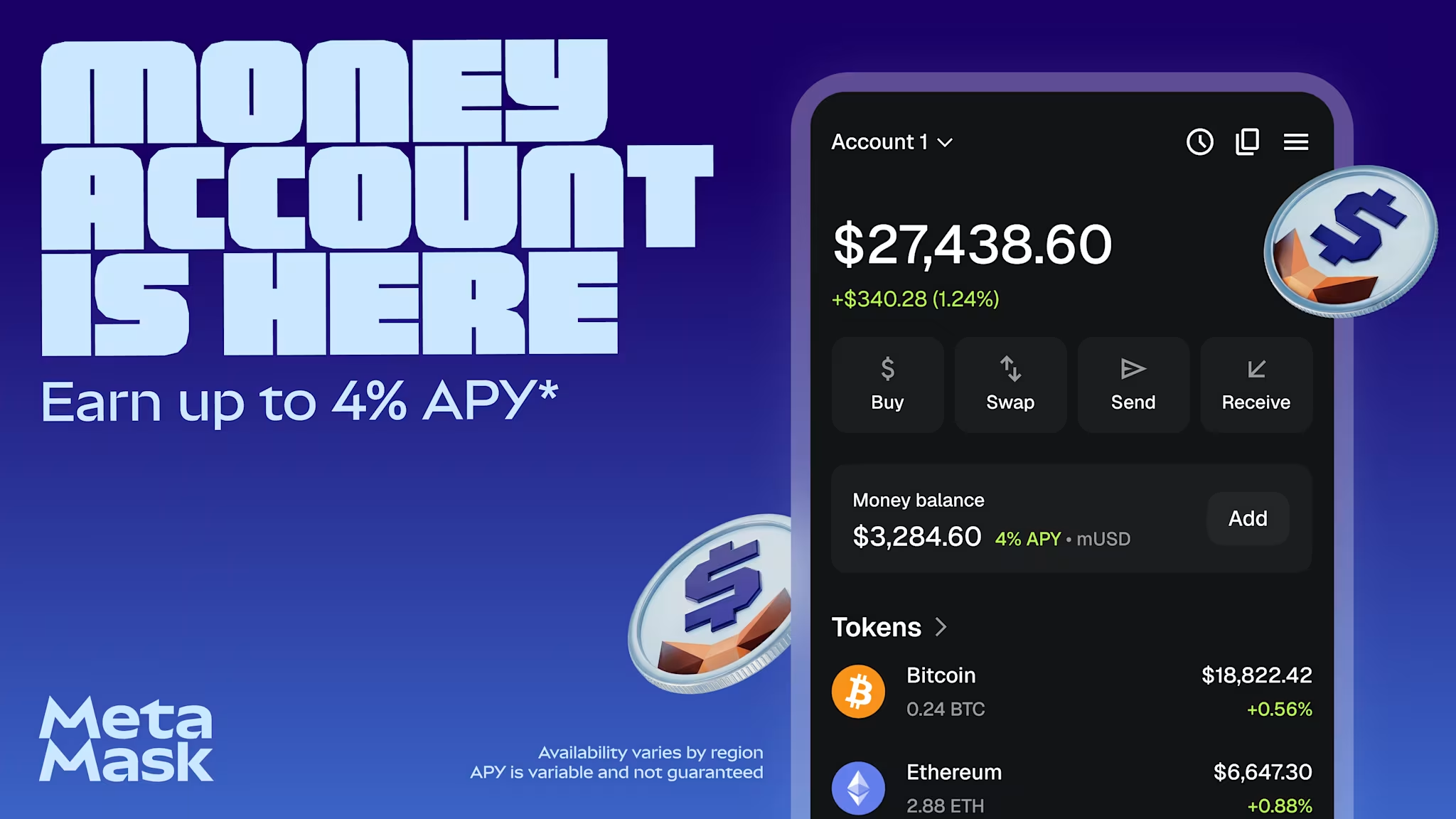
MetaMask lança Money Account, trazendo rendimentos DeFi e gastos globais para saldos em stablecoin
Pela primeira vez, usuários podem ganhar até 6% de APY* variável em saldos de stablecoin e gastar em centenas de milhões de estabelecimentos a partir de uma única conta self-custodial, criada na Monad.
- GUIAS

Melhores apps de carteira cripto mobile em 2026
Compare os principais aplicativos de carteira cripto para iOS e Android.
- GUIAS
Stablecoin vs conta bancária
Stablecoins e contas bancárias guardam valor em moeda fiduciária, mas operam em infraestruturas diferentes. Este guia explica como proteção, rendimento, velocidade de transferência e acesso se diferenciam.

