指南

What is a crypto wallet?
A crypto wallet doesn't hold cryptocurrency. It holds the Private Keys that prove ownership. Understanding what that means is the first step to using crypto safely.
A crypto wallet doesn't hold cryptocurrency. It holds the Private Keys that prove ownership. Understanding what that means is the first step to using crypto safely.

AI agents that only advise don't need wallets. Agents that execute do—they need to hold value, pay for what they use, and settle onchain inside limits the user set.

Combined June 2026 volume across Kalshi and Polymarket hit $44.8 billion, with World Cup markets driving historic trading, but their fees, contracts, and regional availability differ.

A self-custodial agent wallet lets an AI agent turn an instruction into a signed onchain transaction without taking custody of a user's keys. Here's the full intent-to-execution lifecycle.

US spot Bitcoin ETFs shed a record $4.5 billion in June while the biggest wallets added more than 270,000 BTC. Plus Polymarket's CLARITY Act odds get cut nearly in half, and SpaceX joins the Nasdaq 100.

Compare MetaMask, Coinbase, Cobo, Ledger, BitGo, and OKX on custody, permissions, security checks, and human approval—see what's actually shipped in 2026 versus still on the roadmap.
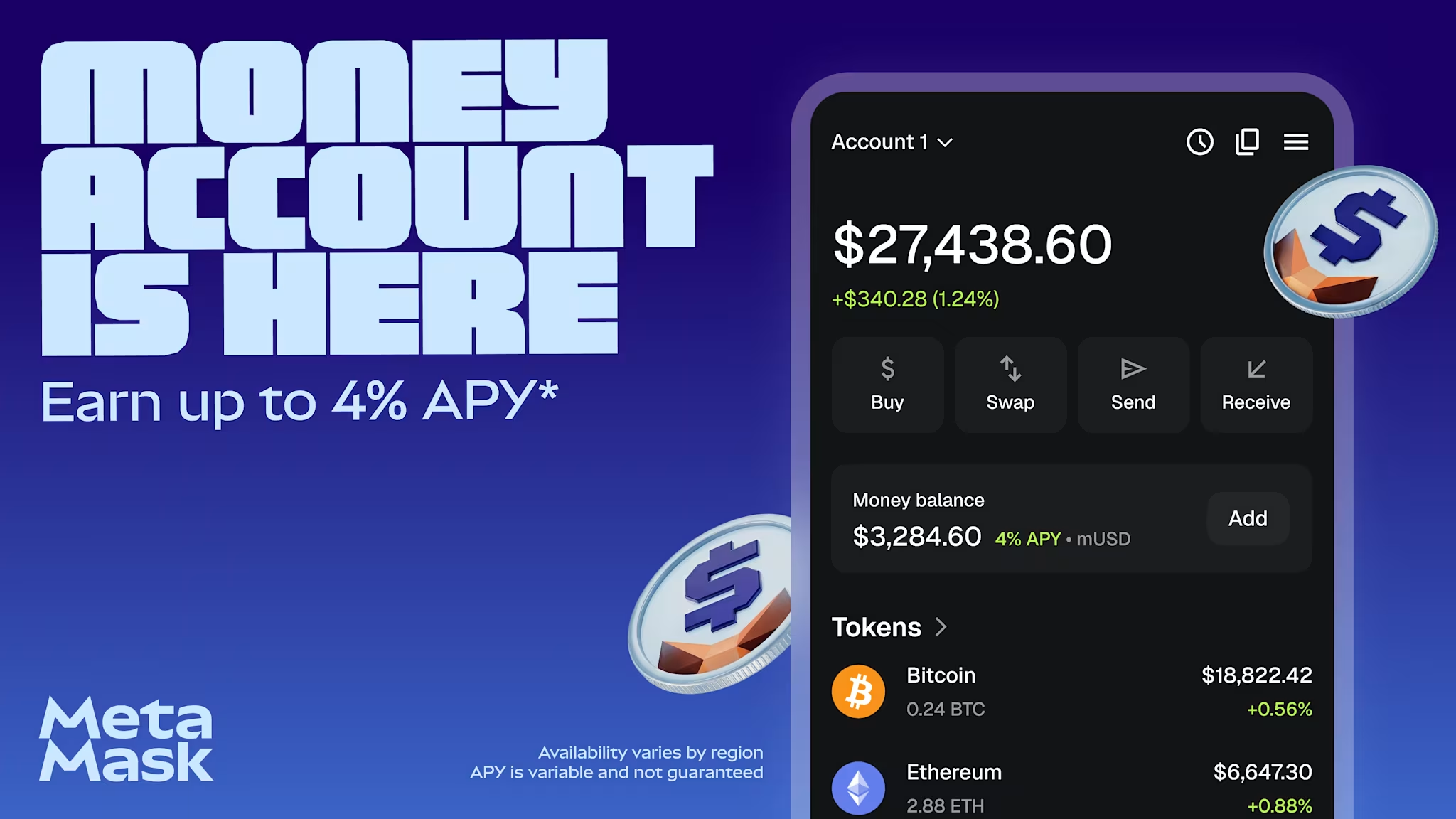
For the first time, users can earn up to 4% variable APY* on stablecoin balances and spend at hundreds of millions of merchants from a single self-custodial account, built on Monad.

Earn up to 4% APY automatically as you trade, send, and spend. Turn your money on.

An agentic wallet lets AI agents execute onchain actions inside defined limits. The category depends on custody, permissions, and its own security stack.
Macro funds are treating semis, Bitcoin, and SpaceX as one risk basket. The AI selloff that erased $600B from SpaceX hit BTC toward $60K.