Cada mes, el gurú de seguridad de MetaMask, Luker, informa sobre los últimos riesgos de seguridad en cripto y las amenazas emergentes que necesitas conocer. Sumérgete en la acción a continuación. Pero primero...
Pionero STEM destacado: Phil Zimmermann y el cifrado PGP
El informático y criptógrafo estadounidense Phil Zimmermann creó el software de cifrado de correo electrónico más utilizado en el mundo, Pretty Good Privacy (PGP), que cuenta tanto con una implementación de código abierto como con una versión comercial.
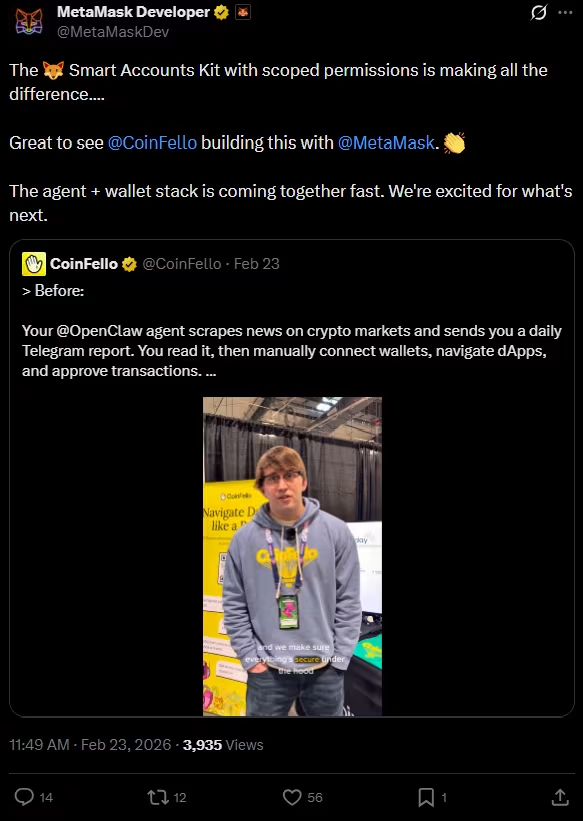
MetaMask y CoinFello lanzan un framework de seguridad para las interacciones de agentes de IA con smart contracts
Nos asociamos con CoinFello para lanzar una skill de Openclaw que hace más seguras las interacciones entre agentes y smart contracts. Como comparte Brett Cleary, CEO de CoinFello: "La CoinFello Skill introduce claves aisladas por hardware y delegaciones detalladas, lo que otorga a los agentes de IA una forma segura de ejecutar transacciones y ayuda a impulsar las capacidades onchain para el ecosistema de agentes en general." ¡Estamos entusiasmados con el futuro de los frameworks con permisos y las MetaMask Smart Accounts!
MetaMask contribuye a los estándares de seguridad para agentes de IA del NIST
El Centro de Estándares e Innovación en IA de EE. UU. (CAISI), parte del Instituto Nacional de Estándares y Tecnología (NIST), emitió una solicitud de información (RFI) "en busca de perspectivas de la industria, la academia y la comunidad de seguridad sobre el desarrollo y despliegue seguro de sistemas de agentes de IA", ¡y el zorro respondió al llamado! La empresa matriz de MetaMask, Consensys, presentó una carta de comentarios elaborada con la participación de nuestro propio Marco De Rossi, Director de Producto y Responsable de IA en MetaMask.
La carta se basa en el trabajo de De Rossi como coautor del ERC-8004, un estándar abierto para la identidad y la confianza de agentes que ha crecido hasta superar los 49.000 agentes registrados desde su propuesta en agosto de 2025. Insta al NIST a distinguir entre "agentes con custodia de claves sin restricciones y agentes que operan mediante delegaciones revocables y acotadas por políticas", y subraya la importancia de considerar las aportaciones de las comunidades de tecnología de código abierto y descentralizada. Lee más al respecto en el blog de Consensys.
Destacados de la comunidad de seguridad: SEAL darkMode en ETHDenver y el descubrimiento de una red de estafas por ZachXBT
Un servidor tuvo la suerte de asistir al evento inaugural de darkMode, que fue lo más destacado de mi experiencia en ETHDenver. Si te quedaste con las ganas, el blog de Security Alliance, Radar, tiene un resumen de algunas de las charlas más sobresalientes. MetaMask está especialmente emocionado por el estreno del documental de Chain Patrol y del investigador de seguridad @dobsec, titulado Lights in Dark Rooms, que fue presentado en Denver. El documental expone las escalofriantes realidades detrás de las operaciones de pig butchering y debutará en EthCC.
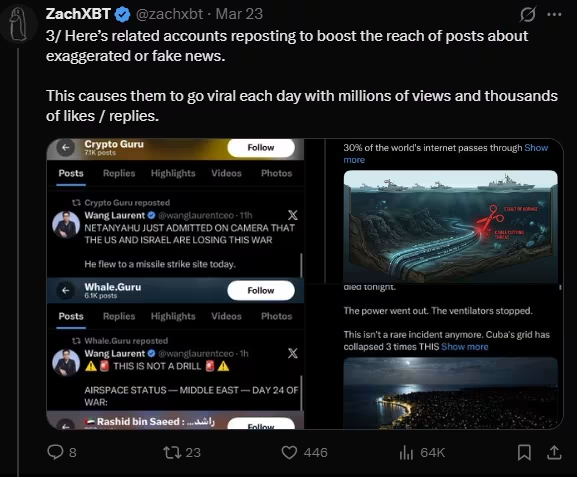
ZachXBT expone una red de estafas con noticias falsas en X
El investigador de seguridad ZachXBT ha descubierto una red de cuentas en X que suplanta a influencers y publica representaciones inflamadas y exageradas de eventos relacionados con la guerra y la geopolítica. Tras atraer clics, los hilos derivan en promociones de estafas cripto. Esto reavivó el escrutinio sobre la plataforma de redes sociales, a pesar de sus recientes esfuerzos por disuadir la actividad de bots y el uso malicioso de IA mediante amenazas de suspensión. Zach argumentó que las prohibiciones y las consecuencias legales serían más apropiadas.
Riesgos de la computación poscuántica para Bitcoin, Ethereum y Solana
Las implicaciones que la computación cuántica tendrá en internet tal como la conocemos se han teorizado durante mucho tiempo —al menos desde 1981—, incluida su potencial para romper el cifrado y poner en riesgo la información privada. (Consulta la publicación del NIST para más contexto sobre el tema.)
Google Quantum AI, la Ethereum Foundation y el horizonte de 2029
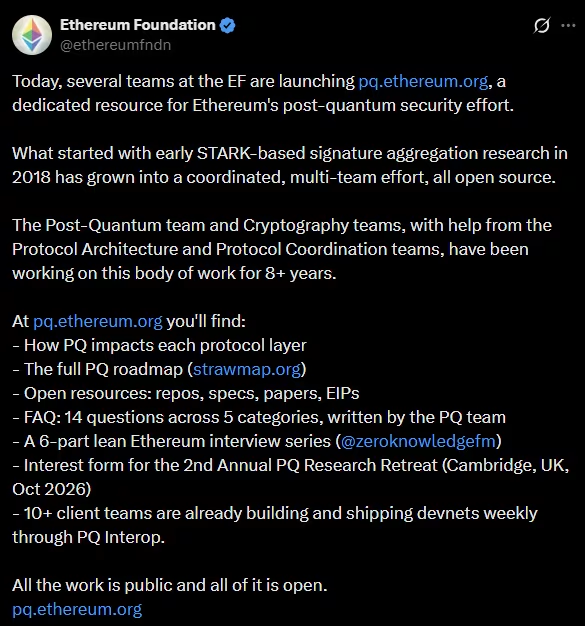
La computación cuántica genera preocupaciones tanto en web2 como en web3. Mientras que Google e IBM han fijado plazos para 2029 para hacer frente a la amenaza inminente, los colaboradores de Bitcoin y Ethereum trabajan en sus propios plazos internos para abordar los riesgos de la computación cuántica y alinearse con web2. La Ethereum Foundation (EF) en particular ha creado un equipo poscuántico dedicado.
El 29 de marzo de 2026, el equipo de Google Quantum AI publicó un whitepaper coescrito por el investigador de la EF Justin Drake y el criptógrafo de Stanford Dan Boneh, que trazó algunas de las formas en que una computadora cuántica podría atacar Bitcoin, Ethereum, Solana y otras redes. Si bien los hallazgos no suponen una sentencia de muerte automática para el mundo de las criptomonedas, el documento refuerza la urgencia del plazo para abordar los riesgos.
Harvest now, decrypt later: la amenaza para los registros distribuidos
Una pieza del rompecabezas es la amenaza de "Harvest Now Decrypt Later" para los registros distribuidos (como las blockchains), que ya está siendo utilizada por actores maliciosos y fue detallada por la Reserva Federal de EE. UU. en septiembre de 2025. Esto, sumado a las amenazas futuras a las firmas digitales, ha generado una preocupación creciente en toda la industria.
La autoridad tributaria de Corea del Sur expone frases semilla de wallets en una foto pública
Dicen que una imagen vale más que mil palabras, pero los ladrones no necesitaron tantas cuando las frases de recuperación de wallets quedaron expuestas en una foto compartida públicamente. Los fondos en cuestión habían sido incautados durante redadas a 124 evasores fiscales de alto valor. Cuando el organismo gubernamental celebró el hecho compartiendo la foto, no se percató de que contenía información sensible.
Esto sigue a un incidente similar ocurrido en 2021, cuando la policía de Gangnam, en Seúl, perdió 22 BTC tras dejar los fondos y una frase semilla en manos de un custodio externo.
TRM Labs despliega agentes de IA para rastrear transacciones cripto ilícitas
La firma de análisis blockchain TRM Labs ha presentado una herramienta de agente de IA diseñada para ayudar a las fuerzas del orden a investigar transacciones de criptomonedas ilícitas. La herramienta está integrada en el servicio Forensics de TRM y traduce instrucciones en lenguaje natural en acciones de investigación complejas, con la esperanza de que ayude a los investigadores a rastrear flujos de fondos sin necesidad de conocimientos técnicos avanzados. El momento no es casual.
Los datos de TRM muestran que el volumen cripto ilícito alcanzó los 158.000 millones de dólares en 2025, y el fraude y las estafas impulsados por IA se han disparado un 500% a medida que los actores maliciosos aprovechan la automatización, los deepfakes y las herramientas basadas en IA para escalar operaciones más rápido que nunca. "La carga de trabajo crece más rápido que la fuerza laboral, y se les pide a los investigadores que operen simultáneamente en decenas de blockchains, jurisdicciones y tipologías", afirmó Ari Redbord, director de asuntos legales y gubernamentales en TRM. Esta herramienta busca cerrar esa brecha.
Campañas de robo de credenciales dirigidas a wallets cripto en marzo de 2026
Han surgido varios informes que detallan estafas en las que se apuntó a credenciales, poniendo frecuentemente en riesgo activos cripto. Aquí tienes un resumen de los descubrimientos recientes de investigadores de seguridad:
Cómo protegerse contra el robo de credenciales
Sé escéptico ante los mensajes no solicitados, ya que las estafas impulsadas por IA ahora usan deepfakes y automatización para parecer más legítimas
Verifica las identidades a través de múltiples canales
Asegúrate de que todos los dispositivos tengan siempre los sistemas operativos más actualizados
Evita hacer clic en enlaces de sitios web desconocidos, especialmente los relacionados con servicios financieros o cripto. Se sabe que los iFrames ocultos sirven para distribuir exploits
Ten en cuenta que los gestores de contraseñas (LastPass, 1Password, Bitwarden, etc.) y las herramientas de 2FA (Google Authenticator, Authy, etc.) también pueden ser objetivos; una sola infección puede comprometer múltiples capas de seguridad
Evita almacenar archivos sensibles (frases semilla, códigos de recuperación, copias de seguridad de cuentas) en las carpetas de Escritorio o Documentos; el malware escanea específicamente estas ubicaciones
Riesgos de seguridad de LLM y agentes de IA para usuarios cripto
El rápido avance de los modelos de lenguaje grande (LLMs) y los frameworks de agentes de IA ha traído beneficios reales, pero también ha introducido una serie de desafíos de seguridad y privacidad que no podemos ignorar. Como cualquier otra herramienta, pueden usarse tanto para el bien como para el mal. Aquí tienes otro resumen:
Cómo protegerse contra las amenazas impulsadas por IA
Si te preocupa el anonimato, elimina publicaciones antiguas con regularidad y rota identidades y cuentas
Evita los enlaces de anuncios y accede directamente a los sitios web oficiales de los proyectos
Desconfía de los airdrops y los sorteos de tokens
Revisa los permisos de las extensiones, elimina las innecesarias y asegúrate de que estén actualizadas
Nunca expongas frameworks de agentes de IA (como Langflow) directamente a internet
Rota las claves API y las credenciales si se detecta actividad sospechosa
Utiliza listas de permitidos y listas de bloqueados tradicionales para las decisiones críticas de seguridad en lugar de depender de la evaluación de un LLM.
Este informe de marzo de 2026 abordó los riesgos poscuánticos para Bitcoin y Ethereum, las campañas de robo de credenciales impulsadas por IA y los frameworks de seguridad emergentes para las interacciones de smart contracts con agentes. Consulta las ediciones anteriores del informe de seguridad cripto de MetaMask para conocer riesgos anteriores y consejos adicionales para mantenerte seguro en todo el ecosistema.