
MetaMask, anteriormente Consensys Software Inc, es la plataforma financiera self-custodial más grande del mundo, que ofrece a las personas un único lugar para guardar, gastar, ahorrar y hacer crecer su dinero tanto en criptoactivos como en activos tradicionales. La compañía está construyendo la plataforma de consumo donde esto ocurre, reuniendo pagos, ahorros, inversiones y activos digitales en una experiencia fluida y unificada. Habiendo crecido a partir de la wallet self-custodial más utilizada del mundo, MetaMask otorga a los usuarios control directo sobre su dinero y activos, con presencia en aproximadamente 190 países. MetaMask ha desempeñado un papel fundamental en el crecimiento de Ethereum desde 2016. Hoy, MetaMask se sitúa en el centro de la economía blockchain, construyendo el sistema operativo para el Open Money y poniendo a las personas en pleno control de su vida financiera.
Leer todos los artículos
Las criptomonedas son activos digitales registrados en una blockchain, un libro de contabilidad compartido y público mantenido por una red distribuida de computadoras, en lugar de una sola empresa o gobierno. La red utiliza criptografía para proteger las transacciones y demostrar la propiedad. Las reglas de consenso individuales de cada red determinan qué transacciones son válidas. Dado que el libro de contabilidad es mantenido por muchos participantes independientes a la vez, no es necesario confiar en ninguna entidad central para que el registro sea honesto.
Descargo de responsabilidad: Esta guía tiene únicamente fines educativos. No constituye asesoramiento financiero, ni una solicitud, y no está dirigida a audiencias del Reino Unido. Las criptomonedas son volátiles, conllevan riesgo de pérdida total y no son adecuadas para todos los usuarios.
¿Qué hace que algo sea una criptomoneda?
Una criptomoneda es una entrada en una blockchain, un registro de que una cuenta determinada posee un saldo de un activo determinado, que puede transferirse a otra cuenta según las reglas que la red aplica. Lo que diferencia esto de un número en la base de datos de un banco es quién mantiene el registro y cómo está protegido. Un saldo bancario existe porque el banco dice que existe, y puede modificarlo. Un saldo de criptomoneda existe porque miles de computadoras independientes en todo el mundo así lo confirman, y cualquier cambio o transferencia requiere seguir las reglas criptográficas de la red que ningún participante individual controla.
Tres propiedades principales definen las criptomonedas tradicionales. En primer lugar, las criptomonedas son digitales y nativas de su red. No son inherentemente una representación digital de un dólar guardado en una bóveda en algún lugar, sino activos que existen como registros en la blockchain. En segundo lugar, los activos están protegidos por criptografía en lugar de por la promesa de una institución. En tercer lugar, generalmente están descentralizadas en cierta medida, lo que significa que el libro de contabilidad es mantenido y validado por un conjunto distribuido de participantes en lugar de una autoridad centralizada. No todos los activos comercializados como criptomonedas tienen estas 3 propiedades en igual medida, lo que explica en parte por qué la categoría es amplia y por qué resulta útil dividirla en tipos. Por ejemplo, los activos del mundo real tokenizados, como las stablecoins respaldadas por dólares, sí representan un dólar custodiado por un custodio.
La primera criptomoneda fue bitcoin, presentada en un whitepaper de 2008 por el seudónimo Satoshi Nakamoto y lanzada a principios de 2009. Bitcoin resolvió un problema que había bloqueado intentos anteriores de dinero digital: cómo evitar que alguien gastara el mismo activo digital dos veces sin que una autoridad central verificara cada transacción. El resto del ecosistema de criptomonedas se ha construido sobre y alrededor de las ideas que hicieron eso posible.
Cómo funcionan las criptomonedas
Entender las criptomonedas implica comprender varias piezas interconectadas: la blockchain que registra los saldos, la criptografía que protege la propiedad y el mecanismo de consenso que permite a desconocidos ponerse de acuerdo sobre qué es verdad.
El libro de contabilidad de la blockchain
Una blockchain es una base de datos estructurada como una cadena de bloques. Cada bloque contiene un lote de transacciones y una referencia criptográfica al bloque anterior. Ese enlace es lo que hace que el historial sea resistente a manipulaciones, ya que modificar una transacción antigua cambiaría su bloque, lo que rompería la referencia en todos los bloques posteriores, y el resto de la red rechazaría el cambio. El libro de contabilidad se replica en muchos nodos, por lo que no hay una sola copia que atacar o editar silenciosamente. Cualquiera puede generalmente inspeccionar el historial completo, razón por la cual las blockchains suelen describirse como transparentes, incluso cuando las identidades detrás de las cuentas no son públicamente conocidas.
Seguridad criptográfica y propiedad
La propiedad de una criptomoneda está determinada por quien controla la Clave Privada de la dirección de wallet en la que se encuentra. Una Clave Privada es un dato secreto que corresponde matemáticamente a una dirección pública en la red. La dirección pública es como un número de cuenta al que otros pueden enviar fondos, y la Clave Privada es lo que autoriza el gasto desde ella. Cuando alguien envía una transacción, su wallet usa la Clave Privada para producir una firma digital que demuestra que la transacción fue autorizada por el titular de la clave, sin revelar nunca la clave en sí. Este es el sentido en que las criptomonedas están protegidas por criptografía: el control del activo es el control de la clave.
Ese diseño tiene una consecuencia importante: quien posee la clave controla los fondos. En la autocustodia, donde un usuario guarda sus propias claves a través de una wallet como MetaMask, no hay ninguna institución a la que llamar para revertir una transacción o recuperar una clave perdida. Esta es la contrapartida en el corazón de las criptomonedas: control directo sobre un activo combinado con responsabilidad directa de protegerlo. La Frase de Recuperación Secreta de una wallet es la copia de seguridad legible por humanos de esas claves, y cualquiera que la obtenga puede acceder a los fondos.
¿Cómo llega a un acuerdo una red blockchain?
Para que un libro de contabilidad distribuido funcione, la red necesita una forma de que los participantes que no se conocen entre sí puedan ponerse de acuerdo sobre qué transacciones son válidas y en qué orden. Esta es la función de un mecanismo de consenso. Bitcoin utiliza prueba de trabajo, en la que los participantes llamados mineros gastan poder de cómputo para competir por el derecho a añadir el siguiente bloque, lo que hace costoso reescribir el historial. Ethereum, tras su transición de septiembre de 2022 conocida como the Merge, utiliza prueba de participación, en la que los validadores depositan ETH como garantía y son recompensados por una participación honesta o penalizados por comportamiento deshonesto. Ambos enfoques apuntan al mismo objetivo: hacer que hacer trampa sea costoso y seguir las reglas sea económico, aunque mediante medios diferentes.
¿Por qué tienen valor las criptomonedas?
Una de las ideas más difíciles de comprender para los recién llegados es por qué un activo puramente digital tendría algún valor, dado que las cosas digitales generalmente son triviales de copiar. La razón es la escasez digital: la propiedad de que una criptomoneda no puede duplicarse ni gastarse dos veces, aplicada por la red en lugar de por un copyright o una empresa.
Antes de bitcoin, cualquier archivo digital podía copiarse infinitamente, lo cual está bien para las fotos, pero es fatal para el dinero. El avance de Bitcoin fue un sistema en el que la red rastrea colectivamente cada moneda, de modo que gastarla en un lugar impide automáticamente gastarla en cualquier otro. Esto resolvió lo que se conoce como el problema del doble gasto sin un árbitro central. Además, muchas criptomonedas aplican un suministro limitado o predecible. Por ejemplo, el protocolo de Bitcoin limita la emisión total a 21 millones de monedas, una cifra escrita en sus reglas y no ajustable a voluntad. Esta combinación —escasez demostrable más propiedad verificable— es lo que permite que una cadena de datos funcione como un activo que las personas están dispuestas a mantener e intercambiar.
Sin embargo, la escasez por sí sola no crea valor. El precio de un token refleja lo que las personas están colectivamente dispuestas a pagar por él, lo que depende de la demanda, las expectativas, la utilidad y el sentimiento, todos los cuales pueden cambiar drásticamente. La escasez digital explica por qué una criptomoneda puede mantener valor. No garantiza que alguna en particular lo hará, y los precios son notoriamente volátiles.
Los principales tipos de criptomonedas
Las principales categorías de tokens son tokens de pago, tokens nativos, stablecoins, tokens de gobernanza y memecoins, aunque muchos activos se utilizan para más de un propósito y aparecen varias veces en la tabla a continuación.
Tipo de token | Qué hace | Ejemplos |
Token de pago | Dinero digital para almacenar o transferir valor | bitcoin (BTC), |
Ether (ETH), | ||
Solana (SOL) | ||
Token nativo | Paga las comisiones de red para ejecutar código programable y aplicaciones en una red blockchain, puede negociarse o hacerse staking | Ether (ETH), |
Solana (SOL), | ||
Avalanche (AVAX) | ||
Stablecoin | Mantiene un valor estable, generalmente vinculado a una moneda fiat | USDC, mUSD, DAI |
Token de gobernanza | Otorga derechos de voto sobre un protocolo descentralizado | Hype (HYPE), Aave (AAVE), Uniswap (UNI) |
Token de utilidad | Otorga acceso a un producto o servicio específico | Chainlink (LINK), Filecoin (FIL), The Graph (GRT) |
Activo del mundo real tokenizado (RWA) | Lleva un activo del mundo real como bonos del Tesoro o fondos a la blockchain como un token negociable | Tokenized Apple (APPLon), Tokenized NVIDIA (NVDAon), |
Tokenized (UNITREE) | ||
Memecoins | Derivan su valor de la comunidad, la cultura y el hype de internet | Pepe (PEPE), Shiba Inu (SHIB), Pudgy Penguins (PENGU), Bonk (BONK) |
Altcoins | Término genérico para toda criptomoneda que no sea bitcoin, abarcando las categorías anteriores | ETH, SOL, HYPE, TRON, ZCASH, USDT, mUSD |
Tokens de pago
Las monedas de pago son la categoría original de criptomonedas, diseñadas principalmente para almacenar y transferir valor, funcionando como dinero digital. Bitcoin es el arquetipo: su propósito principal es ser un activo escaso y resistente a la censura que puede enviarse entre partes sin un intermediario, banco o tercero. Litecoin y Bitcoin Cash son ejemplos adicionales orientados a los pagos. Estos activos tienden a tener una funcionalidad relativamente simple por diseño, priorizando la seguridad, la previsibilidad y la descentralización sobre la capacidad de ejecutar aplicaciones complejas. Consulta Bitcoin versus Ethereum para una comparación más profunda de las dos redes.
Tokens nativos
La segunda categoría principal de criptomonedas son los tokens nativos de plataformas de contratos inteligentes, blockchains que pueden ejecutar código programable, no solo registrar pagos. Ethereum introdujo esta idea a escala, ya que su red puede ejecutar contratos inteligentes, programas que se ejecutan exactamente como están escritos y aplican automáticamente sus condiciones. ETH, el token nativo de Ethereum, se utiliza para pagar las comisiones de red necesarias para ejecutar estos programas. Esta programabilidad es lo que hace posibles las aplicaciones descentralizadas, y los protocolos de préstamo, los exchanges, los juegos y los tokens descritos a continuación suelen vivir en estas plataformas. Otras plataformas de contratos inteligentes incluyen Solana, Avalanche y otras, cada una con diferentes compromisos en cuanto a velocidad, costo y descentralización. La guía complementaria sobre contratos inteligentes explica cómo funciona realmente esta programabilidad, y la guía sobre las redes de capa 2 de Ethereum explica cómo las redes adicionales amplían Ethereum con transacciones más baratas y rápidas.
Stablecoins
Las stablecoins son criptomonedas diseñadas para mantener un valor estable, generalmente vinculadas a una moneda fiat como el dólar estadounidense. Existen porque la volatilidad que hace que las monedas de pago y los tokens de plataforma sean arriesgados de mantener también los hace incómodos para los pagos cotidianos, el ahorro o el movimiento de dinero entre exchanges. Una stablecoin tiene como objetivo mantener un token con un valor aproximado de un dólar, típicamente manteniendo reservas de dólares y activos equivalentes al dólar (como con USDC), o mediante garantías onchain y mecánicas de protocolo (como con DAI y USDS). Las stablecoins se han convertido en una de las categorías más grandes de criptomonedas por valor total, con una capitalización de mercado combinada de más de 300 mil millones de dólares a agosto de 2026. Conllevan sus propios riesgos, ya que un vínculo puede romperse y la calidad y transparencia de las reservas varía. Consulta qué es una stablecoin para más información sobre cómo funcionan estos activos.
Tokens de gobernanza
Los tokens de gobernanza otorgan a sus titulares voz en cómo se gestiona un protocolo descentralizado. Muchas aplicaciones DeFi son gobernadas por sus comunidades en lugar de por una empresa, y un token de gobernanza es el instrumento para ello, ya que los titulares generalmente pueden votar sobre propuestas como cambiar comisiones, ajustar parámetros o asignar el tesoro de un protocolo. Los ejemplos incluyen tokens asociados con los principales exchanges descentralizados y protocolos de préstamo. Poseer un token de gobernanza se parece más a tener una participación con derecho a voto en cómo evoluciona un software que a tener dinero, y el valor de estos tokens depende en gran medida del éxito y la actividad del protocolo que gobiernan. Como con cualquier token, un token de gobernanza puede ser volátil y sus derechos de voto no garantizan ningún rendimiento financiero.
Memecoins
También conocidos como tokens sociales, los memecoins son criptomonedas que se originan a partir de un meme de internet, una broma o una comunidad en línea, en lugar de un caso de uso técnico específico. Dogecoin, lanzado en 2013 como una parodia de bitcoin, fue el primer token social, y ejemplos posteriores como Shiba Inu y Pepe siguen el mismo patrón. Lo que distingue a los memecoins de las otras categorías es que su valor está impulsado casi en su totalidad por la comunidad, la atención y el sentimiento, en lugar de por la utilidad, los flujos de caja o un protocolo. Muchos tienen alto volumen o suministros ilimitados y poca funcionalidad más allá de ser negociados, y el precio de una moneda puede oscilar drásticamente solo por el impulso en las redes sociales. Esto hace que los memecoins sean de los activos más volátiles y especulativos en el mundo cripto: unos pocos han producido rendimientos extraordinarios en períodos cortos, mientras que muchos otros han perdido la mayor parte o la totalidad de su valor con igual rapidez. Dado que se negocian tan intensamente en base al hype, los memecoins también son un vehículo común para esquemas de pump-and-dump y estafas, por lo que requieren especial precaución.
Otros tipos populares de criptomonedas
Más allá de estos cinco, varios otros grupos surgen con frecuencia. Los tokens de utilidad otorgan acceso a un producto o servicio específico dentro de una red. Y un grupo amplio y vagamente definido que suele llamarse "altcoins" simplemente se refiere a cualquier criptomoneda que no sea bitcoin.
Los activos del mundo real tokenizados (RWAs) son una categoría de tokens cripto de rápido crecimiento que representan un activo fuera de la cadena en redes blockchain, como acciones, ETFs, bonos del Tesoro de EE. UU. o materias primas. Los titulares de RWA obtienen exposición económica al activo subyacente en lugar de la propiedad legal directa del mismo, y el token puede mantenerse y transferirse como cualquier otro. Excluyendo las stablecoins, los RWAs tokenizados valen más de 31 mil millones de dólares a agosto de 2026, abarcando bonos del Tesoro de EE. UU. tokenizados, crédito privado y materias primas. La disponibilidad y elegibilidad varían según la jurisdicción; explora el mercado de RWA tokenizados por categorías. MetaMask también permite a los usuarios comprar y vender acciones tokenizadas, materias primas y fondos directamente desde tu wallet de autocustodia.
¿Para qué se usan las criptomonedas?
Los usos prácticos de las criptomonedas se derivan de sus tipos. Las monedas de pago y las stablecoins se utilizan para enviar y recibir valor, incluso a través de fronteras, a menudo más rápido y con menos intermediarios que los sistemas tradicionales. Los tokens de plataformas de contratos inteligentes impulsan las finanzas descentralizadas (DeFi), donde los préstamos, los empréstitos, el trading y la generación de rendimiento ocurren a través de código en lugar de a través de bancos o corredoras. Algunas personas mantienen criptomonedas como una inversión especulativa o a largo plazo, apostando por la adopción o la escasez. Otras las usan para actividades onchain específicas, como participar en la gobernanza, acceder a aplicaciones o coleccionar activos digitales.
Una wallet es la herramienta que une estos usos. Una wallet de autocustodia como MetaMask almacena las claves que demuestran la propiedad y permite a un usuario mantener criptomonedas, enviarlas y recibirlas, y conectarse a aplicaciones descentralizadas directamente, sin que un intermediario custodie los activos en su nombre. Interactuar con la mayoría de las aplicaciones DeFi o servicios onchain requiere una wallet de este tipo, razón por la cual configurar una es generalmente el primer paso práctico después de adquirir cualquier criptomoneda.

Traducido por IA. Puede contener errores. Por favor, verifique siempre la información.
- LO ÚLTIMO
Presentamos MetaMask Transaction Shield
Obtén protección de transacciones y soporte prioritario para mayor tranquilidad.
- LO ÚLTIMO
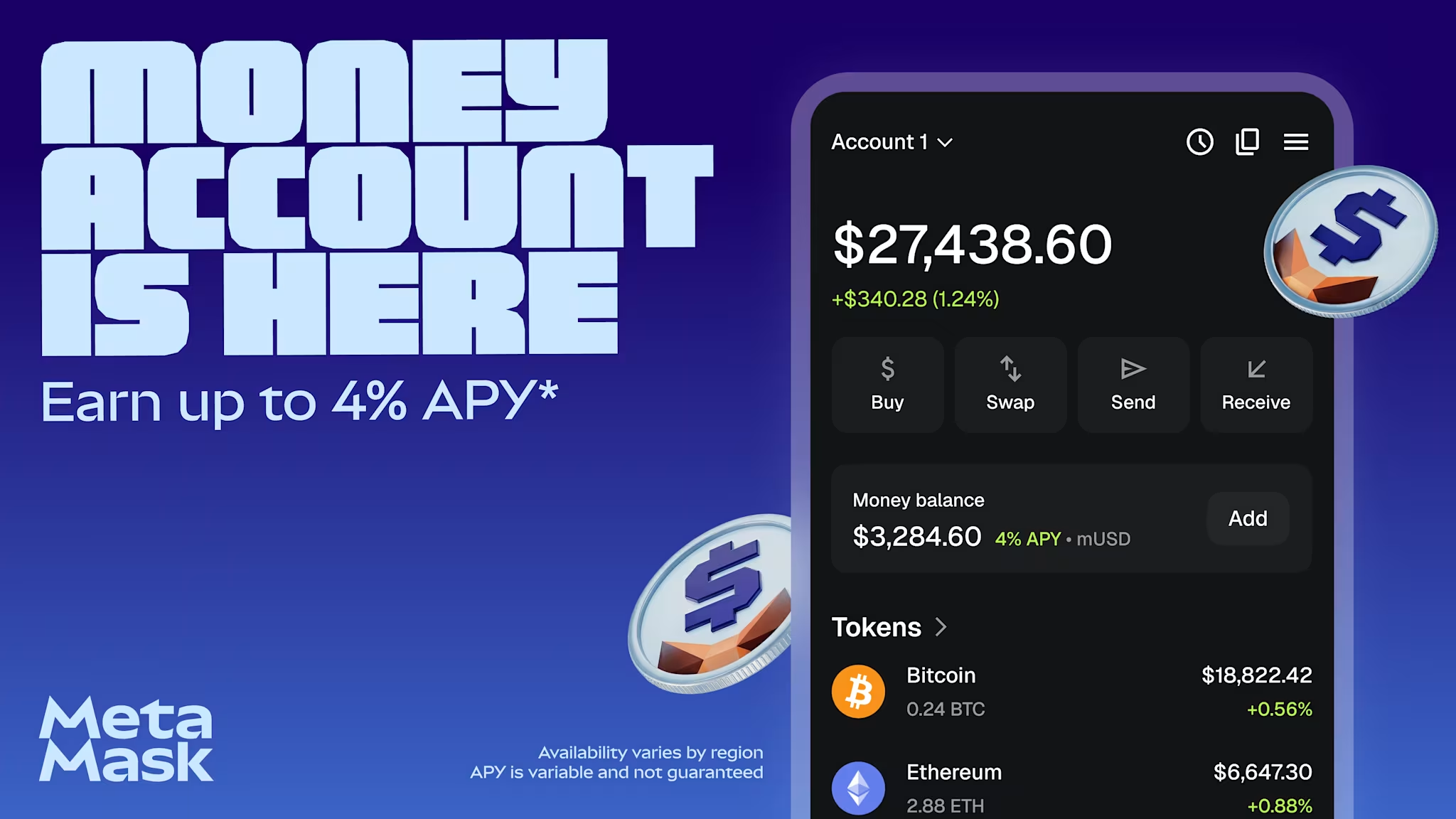
MetaMask lanza Money Account, combinando rendimiento DeFi y pagos globales con saldos en stablecoins
Por primera vez, los usuarios pueden ganar hasta un 6% de APY* variable en saldos de stablecoins y gastar en cientos de millones de comercios desde una sola cuenta autocustodiada, construida en Monad.
- GUÍAS

Las mejores apps de cripto wallet móvil en 2026
Compara las principales apps de billetera cripto para iOS y Android.
