DEVELOPERS
How to trade prediction markets with MetaMask Agent Wallet: 9 top tips
Your agent can bet on a prediction market from one sentence. Here's how funding, quoting, order types, and redemption actually work under mm predict.
Your agent can bet on a prediction market from one sentence. Here's how funding, quoting, order types, and redemption actually work under mm predict.

A MetaMask delegation lets an agent buy only sports-news services; GenLayer's AI jury reviews each purchase and revokes the delegation onchain the moment one falls outside that mandate.
Your agent can swap or bridge tokens from one sentence. Understand how it fills from quotes, slippage, routes, and more.

Your agent can open a leveraged position from one sentence. Understand how it fills: quotes, limit prices, slippage caps, and stop levels.

CoinFello is the first agent that allows both end-users and developers alike to use any onchain protocol through a chatbot-like user experience.

Clawnch's first delegation integration went from zero to a proven onchain flow in three days. Porting it to Python for a second agent client took days, not weeks.

Revoke.cash's feedback helped shape MetaMask's token-approval-revocation permission type, the ERC-7715 permission that lets Auto-Revoking act without ever holding a user's keys.
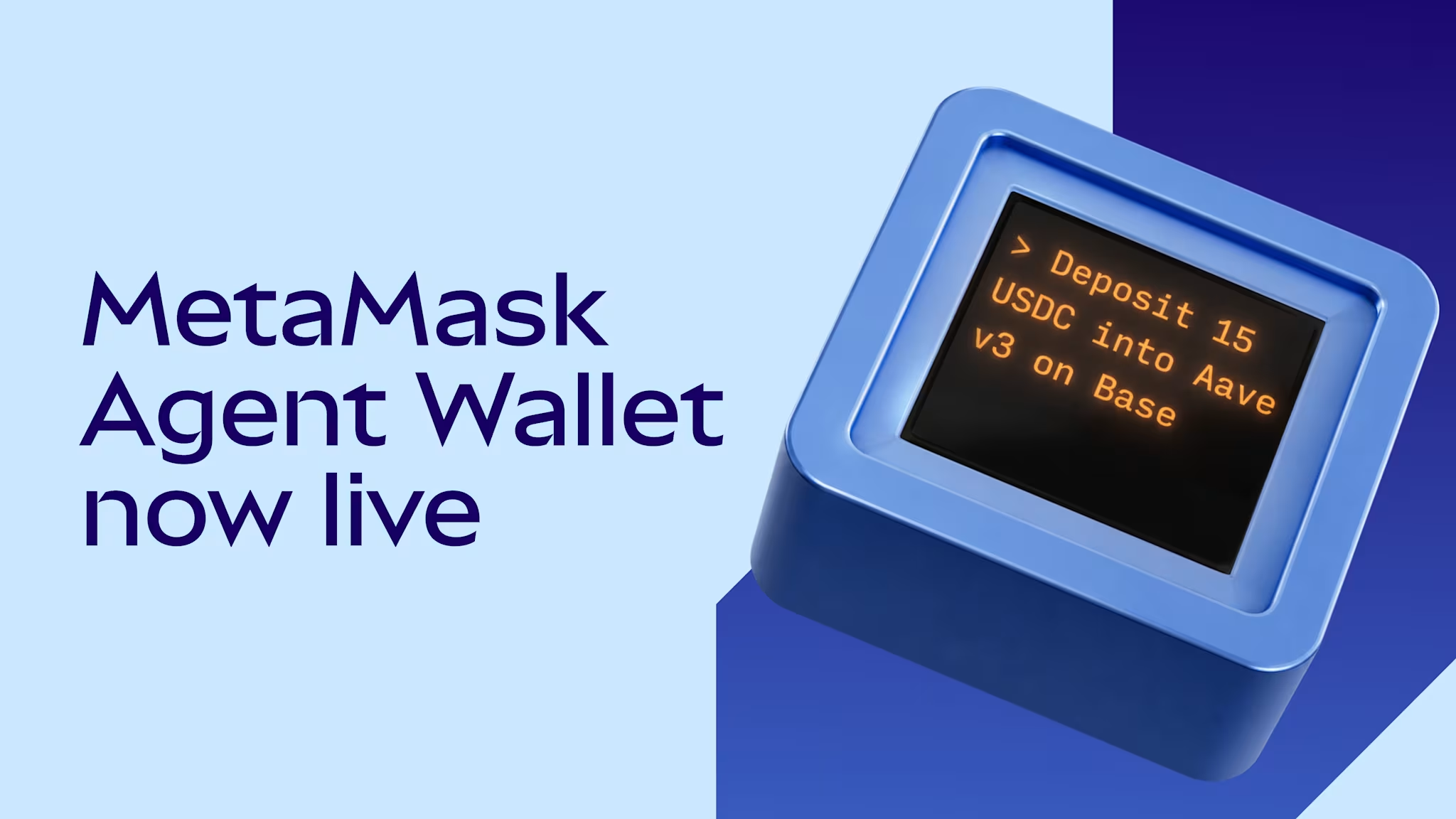
Set spend limits, allowlist protocols, and pick Guard Mode or Beast Mode, then let your agent execute behind threat scanning and MEV protection. No native gas token needed.
Agent wallets face prompt injection, key exposure, and permission risk. Here's how wallet isolation and spend limits minimize risk.
x402 revives the dormant HTTP 402 status code so servers can request payment and AI agents can settle it inline, with no accounts or checkout flow per call.