
Eric Mack is a content creator at Consensys and Editorial Steward for Linea. He's also a Senior Contributor for Forbes and spent 25 years as a journalist contributing to CNET, Inc., NPR, CBS, AOL and numerous others. He lives off-grid with his family in New Mexico and at OurUncertainFuture.com.
Read all articles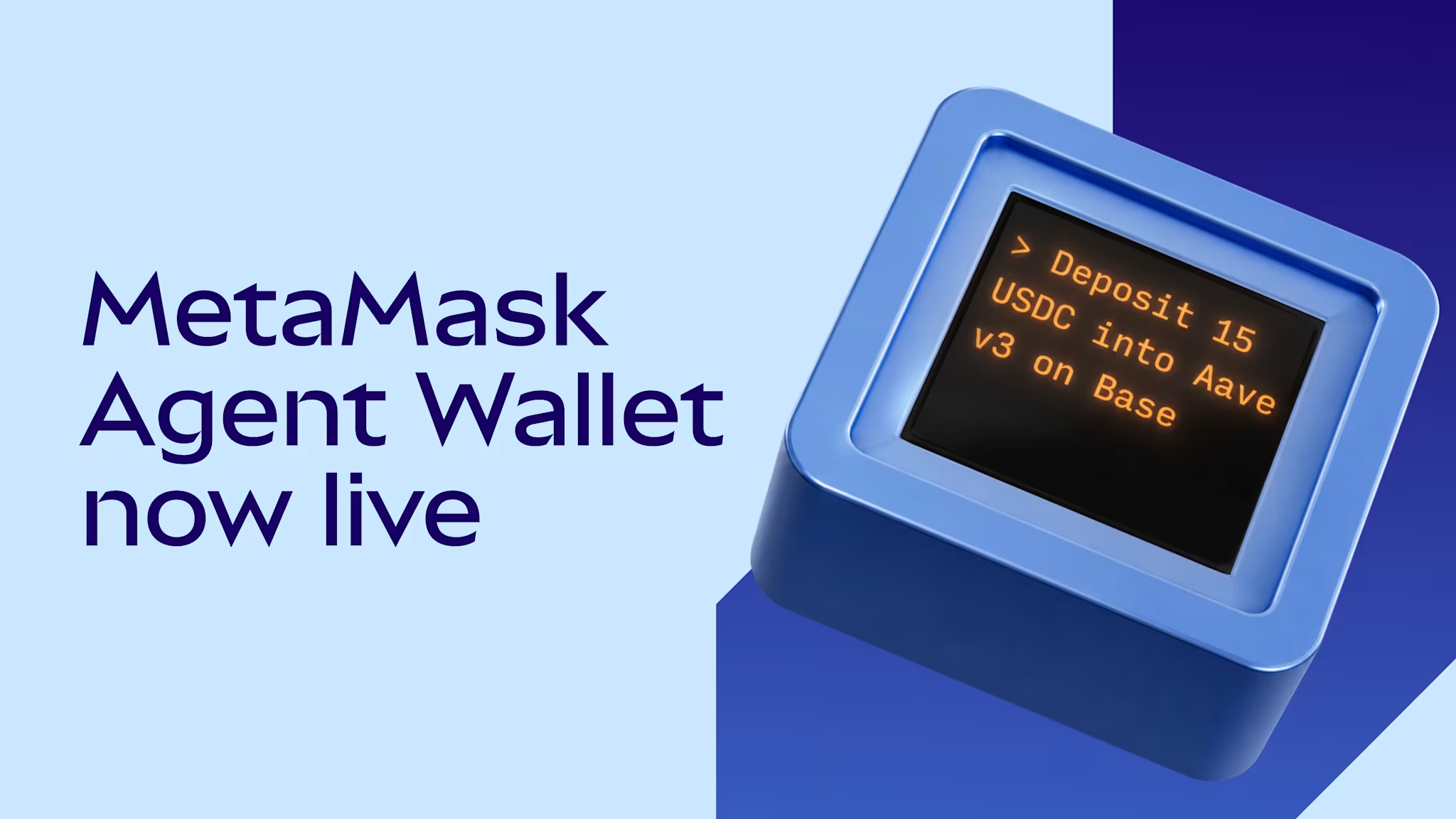
AI agents are getting better at executing opportunities onchain, but before diving into the agentic economy the most important question to ask is: can you let an agent act on your behalf without handing it unchecked control of your wallet?
MetaMask Agent Wallet officially launches today, giving traders and builders a self-custodial way to let AI agents execute onchain actions while staying inside user-defined rules.
Agent Wallet is built for the next generation of agentic trading: agents that can monitor markets, reason across protocols, prepare transactions, and execute when the conditions are right. It brings that process into MetaMask's security model, with spend limits, allowlisted protocols, risk settings, transaction simulation, threat scanning, and MEV protection built into the path to execution.
In short: your agent can move faster, but you still set the boundaries.
What MetaMask Agent Wallet can do right now
MetaMask Agent Wallet lets you connect your preferred agent framework, configure wallet rules, and let your agent operate within those rules.
You can use Agent Wallet to:
Connect agent frameworks including Claude Code, Codex, OpenClaw, Hermes, OpenCode, Cursor, and more
Execute across HyperLiquid and supported EVM chains like Robinhood and Monad
Set spend limits, allowlisted protocols, and risk preferences
Choose between Guard Mode and Beast Mode depending on how much control you want at execution time
Let your agent execute ERC-7821 batch swaps, and prepare one-shot trades
Never worry about paying for gas. Agents can transfer and swap without holding a chain's native token for gas; MetaMask settles the network fee in the token being moved
Use MetaMask's transaction security pipeline before supported EVM transactions land
Allow your agent to self-improve over time through granular error codes and hints
Agent Wallet is designed for traders who already use agents for research and analysis, as well as builders creating new agentic trading workflows. Instead of forcing agents to work around wallet UX built for manual clicking, Agent Wallet gives them a wallet interface designed for autonomous execution with user-defined constraints.
Safety is the product
The question we hear most often about agentic wallets is simple: is it safe to let an AI agent transact on your behalf?
Our answer starts with control. Agent Wallet is not about giving an agent unlimited access. It is about defining what the agent is allowed to do, then enforcing those rules at the wallet layer.
Users can define spend limits, allowed protocols, and a risk profile before an agent acts. Supported EVM transactions then pass through MetaMask's security pipeline:
Transaction simulation shows what the transaction is expected to do before signing, including balance changes, approvals, and gas routing.
Threat scanning, powered by Blockaid and tested across millions of MetaMask transactions, helps identify malicious transactions before they reach the user.
MEV protection helps execute transactions without leaking value to MEV bots.
For eligible transactions that clear MetaMask's transaction simulation, Transaction Shield threat scanning powered by Blockaid, Smart Transactions MEV protection and still result in a loss, Transaction Protection coverage is available up to $10,000 per month (find full details on Transaction Protection here).
This security-first model is why Agent Wallet is built around rules, not blind delegation. The agent can act, but it acts inside the user's boundaries.
The next step for agentic wallets
For agentic finance to work, execution has to be constrained, inspectable, and secured by default. Users should not have to choose between speed and control. Builders should not have to invent wallet safety from scratch. And agents should not need unlimited authority to be useful.
That is the foundation MetaMask Agent Wallet is built on: faster execution, fewer mistakes, broader support, and security rails that stay in place while your agent works.
Start using MetaMask Agent Wallet now.
To learn more about agentic wallets, read What is an agentic wallet, and why does it need its own security stack?
- Eric Mack
- GUIDES
Bitcoin vs Ethereum: what's the difference?
Bitcoin and Ethereum are the two largest crypto blockchain networks, but they were built for different purposes. Explore how they compare.
- GUIDES
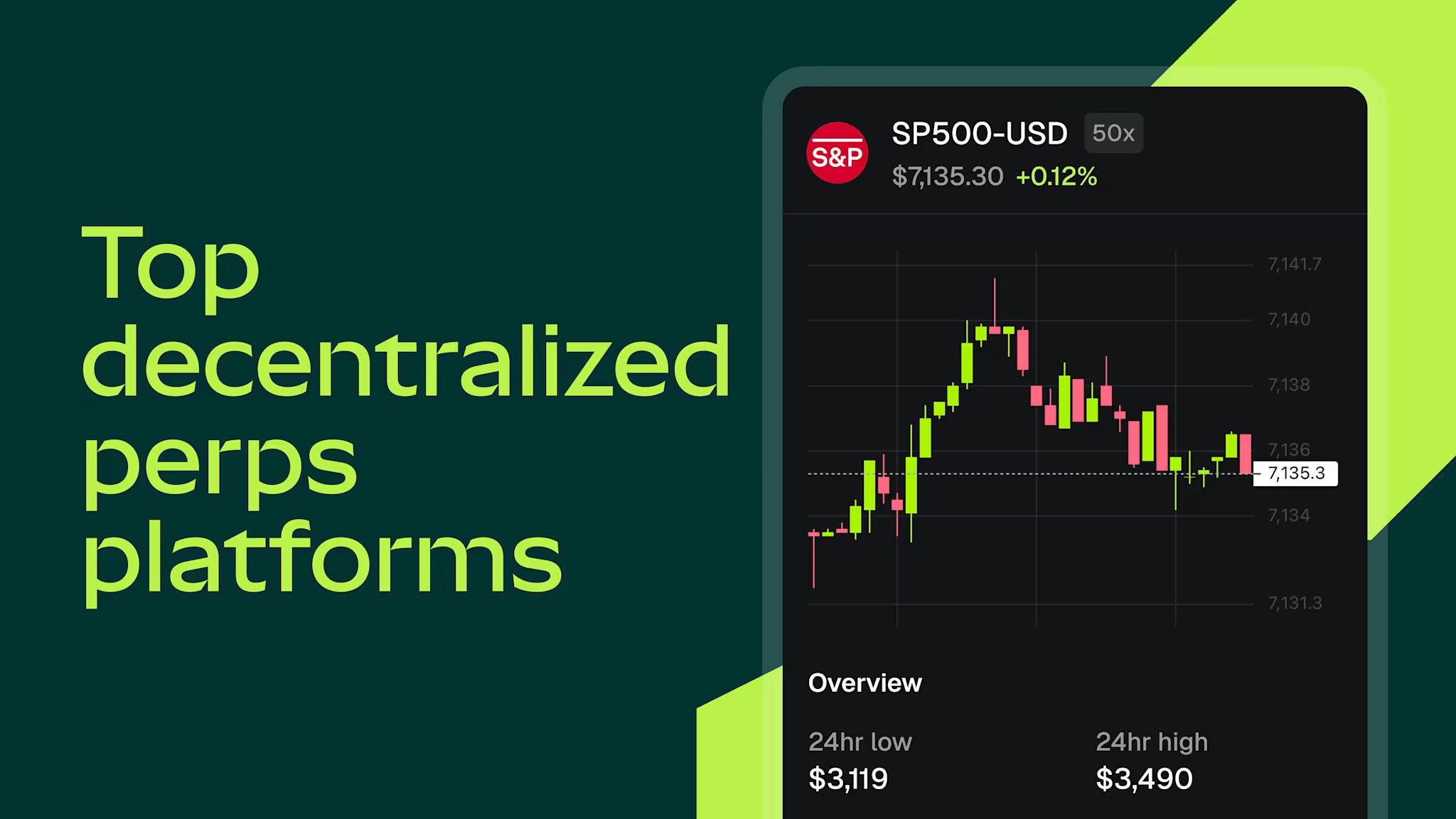
Top perps DEXs in 2026
Top perps DEXs in 2026 Excerpt: Hyperliquid, Aster, Lighter and more: how the leading onchain perps venues compare on volume, fees, and design.
- GUIDES

Prediction markets in 2026: Key trends reshaping forecasting, trading, and regulation
Explore major prediction market trends in 2026 including Polymarket's CFTC approval, AI trading, sports contracts, evolving global regulations, and more.
